2020 CATALOG
Machinery Related to Air Car Design
- Hybrid and Closed Cycle Pneumatics
- Reheating Compressed Air
- Mechanics of Vehicles
- Air Tanks, Composite Materials, Protection
- Regenerative Air Car Designs
- Eskeli's Work-free Heat Pump
- Fluid Power without Moving Parts
- Jet Pumps
- New Compressed Air Patents (Volume One)
- Notable Genius in the Pneumatics Field
- go to main catalog headings (bottom of page)
The greenback dollar was issued debt-free by President Lincoln
without the permission of any bank. R.I.P. Abe!
Hybrid and Closed Cycle Pneumatics
Excellent and informative technical articles and patents on air cars and stationary pneumatic power plants that use Hybrid and/or Closed Cycle pneumatic power plants. Hybrid is a system that uses a gas or diesel engine to run a compressor and an air engine to run the car. Closed cycle or "return-pipe" air systems have many advantages; this involves recompressing the exhaust air into the tank for re-use of the same air.
Item # 50-05
Reheating Compressed Air
Reheating compressed air to obtain a unit of power from the air later is several times cheaper than compressing more air from scratch to achieve the same gain in available energy. A scientific study giving detailed performance data of air engines like the ones used to run pneumatic locomotives, using straight compressed air, reheated compressed air, steam, and a steam-air mixture. High efficiencies were attained.
Item # 47-00
Mechanics of Vehicles
How to figure out how much power you need to run a car under various conditions, air car speed records, air and steam vs. internal combustion for torque delivery, tractive power of compressed air locomotives. For a simplification of the most important parts of this excellent book, see Compressed Air Power Secrets.
Item # 34-00
Air Tanks, Composite Materials, and Impact Protection
Filament-wound tanks that weigh a fraction of solid metal tanks, and are much safer. Carbon, Kevlar, and fiberglass-wound tanks available in many sizes from a variety of manufacturers. In 1982, I was told by an engineer at one of these companies that a tank one foot in diameter, ten feet long, and wound with carbon fiber around a thin aluminum shell to safely hold 15,000 psi would weigh only 100 pounds.
Item # 45-00
Regenerative Air Car Designs
Heat recovery, using the energy in high pressure air, regenerative braking, regenerative shock absorbers, neutralizing wind resistance.
Item # 04B-00
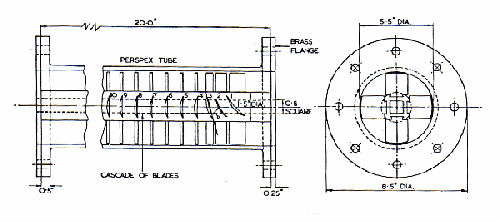
The fluid diode is a shape-forced flow condition approximating the effect of a mechanical one-way check valve, without using any moving parts. The first fluid diode was invented by Tesla, who called it the "valvular conduit." The cascade diode (ABOVE) is one of the best fluid diodes, using successive stages of stationary blades to gradually turn the air around so it is many times easier for the air to go forward than backward. These devices are used in fluidics, the micro-logic division of pneumatics akin to electronics. The French Escopette pulsejet, among others, use a similar concept in a valveless pulsejet.
Eskeli's Work-free Heat Pump
Except for his first two patents, which describe rotary pulsed-jet pumps, all these patents are talking about machines that manipulate fluid flow to capture ambient heat and re-store it at a level of energy quality where it will be usable to fuel the manipulations that make the necessary energy available. The basic design is a rotor with fluid pathways and heat exchanger cycles. The self-sustaining aspect hasn't yet proven itself out to my knowledge, but his premise is applicable to the design of free range air cars and stationary solar pneumatic power plants. Includes an article written by Eskeli in the '70s, an article written about him in 1989, and 31 of his 56 patents.
Item # 16-95
Fluid Power without Moving Parts
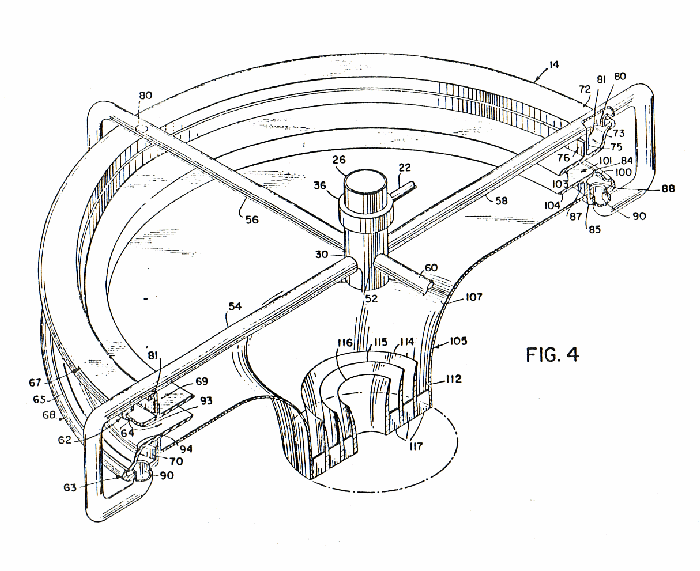
Steam-jet refrigeration, vortex tubes, heat pipes, fluid diodes, pulsed combustors, and the Coanda effect: jet-powered hovercraft without fans.
Item # 06-00
Jet Pumps
It was General Herman Haupt who suggested the use of jet pumps to induce additional atmosphere into the compressed air in order to increase an air car's range between fill-ups. The "thermal compressor" has no moving parts, but it has plenty of names: jet pump, injector, airmover, inducer, inspirator, vacuum pump, ejector, pressure exchanger, venturi, dredge, etc. Info on jet pumps, boiler feeder injectors, efficiency of jet pumps, steam injector design manual (1890), 80 psi air injector that puts air into a 60 psi tank, manufacturer info, Coanda effect air amplifiers, engineering info.
Item # 36-00
Compressed Air Patents
High Vacuum Pump, Air Engines, Gas Engine Conversion to Pneumatic, Hybrid Pneumatic, Heat-assisted Air Engines.
Item # 41-00
Notable Genius in the Pneumatics Field
John Keely, Nikola Tesla, Buckminster Fuller, Maxfield Parrish Jr, Ctesibius, Edward A Rix, Albert Einstein, James Clerk Maxwell, Bill Lear, Amory Lovins, Terry Miller, Air Car Career Track, billion dollar offer.
Item # 49-00