AIR CAR HALL OF FAME
Antonio Soro
Soro had the most unusual pneumatic power plant I've ever seen, patented in at least five countries. And the weirdest, most tragic life story of anyone in this collection. In fact, anyone who makes a movie from this story will have a winner on their hands, because it's all so implausible.
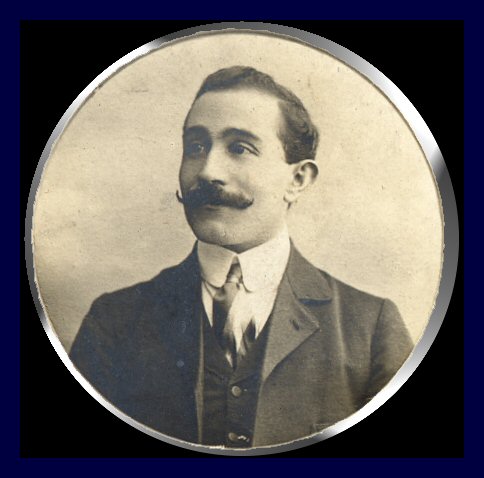
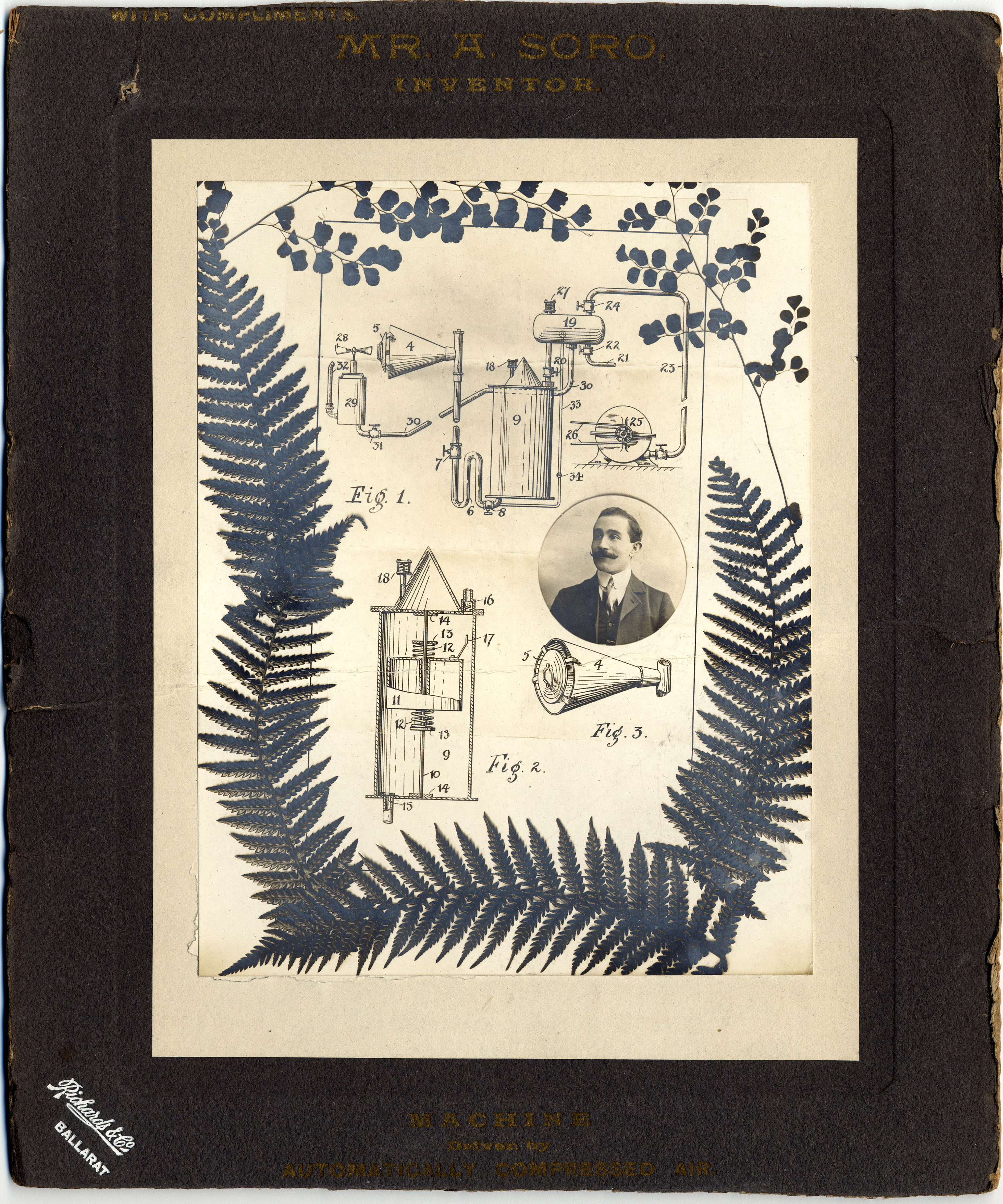
Antonio Soro ~1912
- Invention Summary
- What the Inventor Claimed
- What the Publicity Stated
- Inventor Biographical
- Patents
- Work Experience
- Family Background
- Personality
- Legal Problems?
- Articles & Graphics
Invention Summary
What the Inventor Claimed
Ran his house lights for free on his air machine in 1912.
What the Publicity Stated
Made a big splash in the newspapers three times. First the invention, and see bio for the rest.
Inventor Biographical
Patents
New Zealand Patent 31346 "Means for Obtaining Power" 16 May 1912; Spain patent "Procedimiento para producir una corriente de aire y obtener fuerza motriz" 19 December 1914; Canada patent 147963 "Power Mechanism"; France patent 444881 "Perfectionnements aux modes de production de puissance" 28 October 1912; Switzerland patent 65794 "Installation pour la production de force motrice a l'aide de l'energie d'un courant d'air" 14 June 1912
Work Experience
Self-taught engineer, mechanic, Italian Navy.
Family Background
Antonio Soro was a naval mechanic and engineer who left Italy with his mother Maria Cattarina Sanna and sister Elena Elizabeth Soro. They lived in Ballarat, Australia. He was born on 17 June 1884 in Codrongianos, Sassari, Sardinia (Sardegna). His father was a lawyer and/or farmhand named Giovanni Soro. Antonio's brother Giovanni died as an infant in 1890. There's no record of Antonio's father making it to Australia.
Antonio also had an older brother named Costantino who we know nothing about. Except that he married a woman in Italy on 13 December 1908. Costantino's brother Antonio and their mother Maria Cattarina Sanna emigrated from Sardegna to Australia only one month later, arriving in Melbourne on 3 February 1909. It's possible that Antonio and Costantino are the same person since I can find birth records for Antonio's younger brother and older brother, but not for Antonio. Costantino's birth record shows he was born on 17 December 1881 vs. Antonio's birth date (with no official record) of 17 June 1884. It's true that news reports are all over the place about his age/birth year, generally reporting him to be even younger than the supposed birth year of 1884 would make him. Both Costantino and Antonio were mechanics. The general idea here is that the marriage (or the new husband?) might have been a dud and the mother might have helped "Antonio" to escape the marriage. This is pure conjecture, but stranger things have turned up in my research.
Antonio invented and built a working compressed air power plant. His Italian brother-in-law Charles Dalbora and other relatives in Australia were in the fruit business. Antonio borrowed money from Dalbora's Italian business partner to pay for patenting his invention in several countries. When the patent grantings started coming in, the financier demanded his money but Antonio had no skill marketing his invention and couldn't pay or couldn't pay enough to satisfy the financier. The financier, Giovanni Guiliano, was also accused by a 3rd party of conspiring to steal the invention with help from a cohort inside the patent system.
Antonio had a mental breakdown due to the pressure and was afraid of the financier. He tried to escape Australia but was found by bro-in-law & financier before boarding a ship, rescued from a mental institution, and returned to Ballarat. He claimed he had been kidnapped and taken on a long plane ride, then dropped into a lake. His sanity was questioned in the newspapers.
Antonio's patent didn't mention the secret injector that made it work. The financier stole the injector and kept it under his sick wife's pillow so Antonio wouldn't take it back. The case went to trial where Antonio was a trembling mess vs. a seasoned local businessman, and the airplane tale had already made him look like either a lunatic or a liar. There's no evidence that he ever did anything with the invention and I imagine the court probably gave rights to the invention to the wise-guy financier.
Antonio could play several musical instruments. He could play several operas from memory. After the invention and related disaster in court, he moved in with his music teacher, a middle-aged woman in another city, as a boarder. Unfortunately for all concerned, Antonio augmented his invention-obsession by becoming obsessed with the music teacher's daughter, Patricia Angela Bickett, who was betrothed to a man that lived in a different city. She was a school teacher.
This situation was not resolved properly and Antonio's emotional state degraded to the point where he convinced himself that he and the girl were in love and had made a suicide pact. He bought a gun and six bullets and met her in a public park. He used the first four bullets on her and tried to shoot himself in the head, but he was shaking so badly that the first attempt barely scratched his face and the last bullet misfired.
Antonio ran away and was found a few days later hiding in the bottom of a boat. He was convicted and sentenced to hang, but his relatives in Italy convinced the court to deport him to Italy instead so he could serve in the Italian navy's WWI effort. So he spent only four years in prison for the murder.
Antonio was later able to sneak(?) back into Australia when his mother was sick. He lived there quietly the rest of his life, avoiding women and living alone. A tabloid announced he was back in Australia but when the immigration authorities looked into the matter, his family claimed he had visited briefly but returned to Italy. It seems he really had just moved to the other end of Australia. At one point an arsonist burned Antonio's house down.
A descendant of Antonio's older sister Elena was the creator of the Australian marina industry. This man stated that an uncle used to take him out in a boat when he was young. We don't know if this uncle was Navy veteran Antonio Soro or someone else.
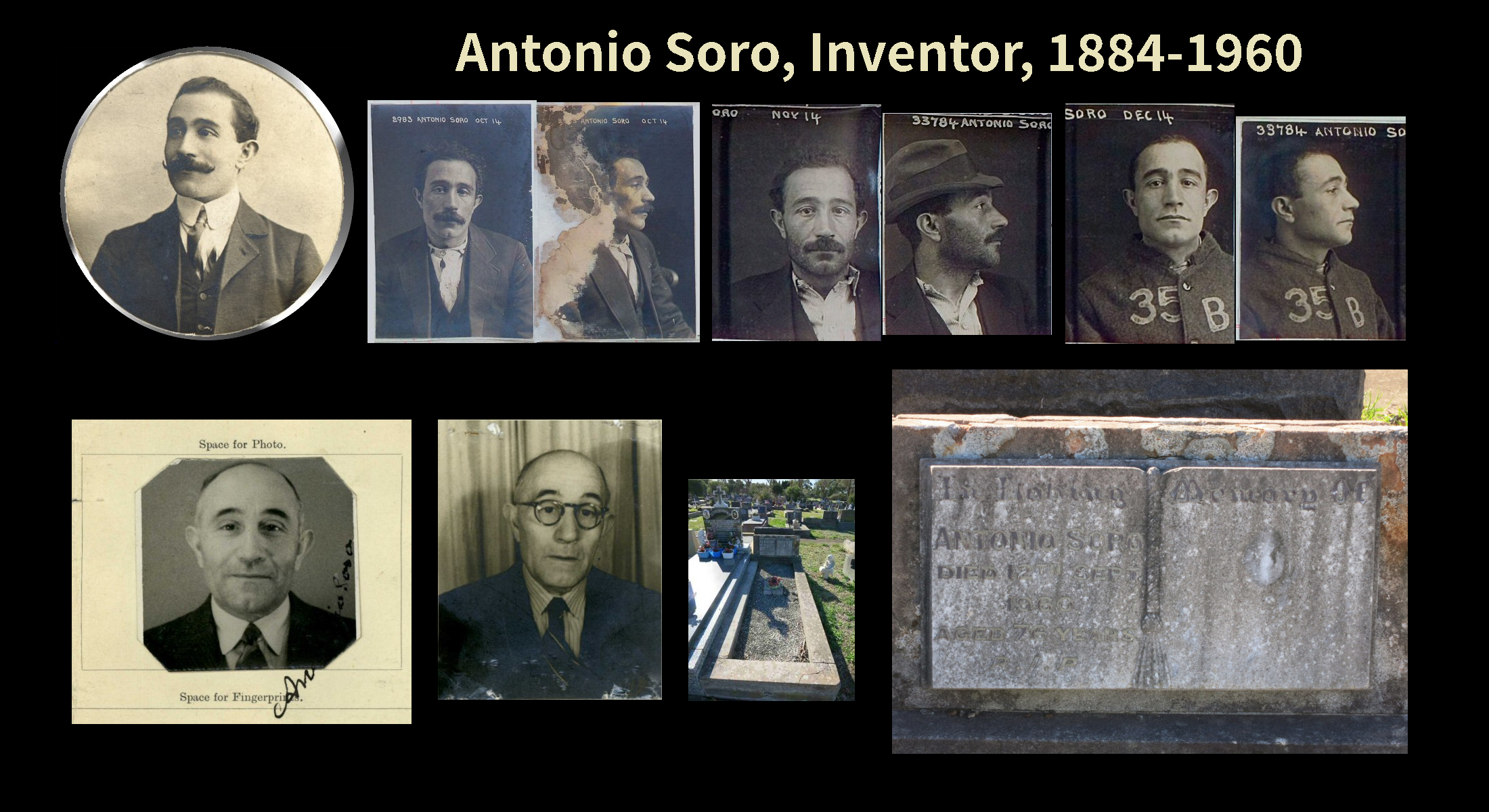
Antonio died on 14 September 1960 and is buried in Rookwood Catholic Cemetery, Rookwood, New South Wales, Australia.
Thanks for research assistance and support: Helen Harris (photo & prison records) and Chris Morant (government archives).
Personality
Musical savant. Extremely intelligent but equally emotionally immature and insecure. Wine lover. Subject to trembling.
Legal Problems?
Accused his financier of stealing the key part of his invention. Murdered a young woman in a supposedly failed suicide pact (probably delusional).
Articles & Graphics
More information on the inventor and the invention, if available:
- Antonio Soro's portrait & patent drawing, presented
to Mrs. Bickett,
which she was happy to give to the police and never see again. - Antonio Soro's Canadian Patent
- Antonio Soro Photos 1912-1948
- 1921 alien registration
- 1928 immigration investigation
- 1928 re: Smith's Weekly article
- 1939 alien registration
- 1944 WWII security investigation
- 1948 alien registration
- Antonio Soro's arrest records
- Antonio Soro newspaper articles