
AIR CAR HALL OF FAME
Leonce Desforges Jr.
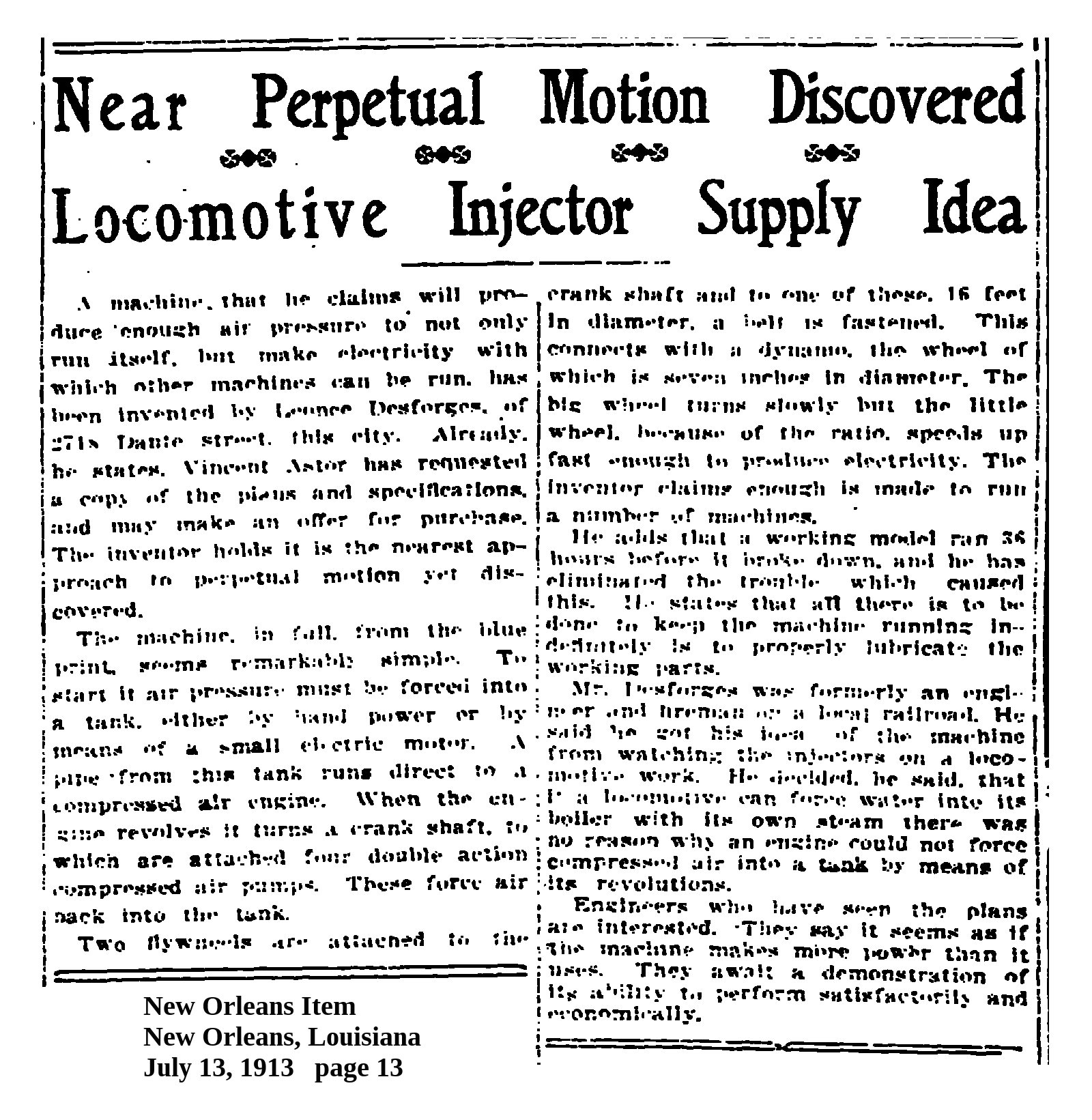
A pre-filled air tank provides more power than it uses, returning the air engine's exhaust to the tank through an injector. There is a 16-foot-diameter flywheel on the air engine's crankshaft which operates four double-acting air pumps. A 7-inch flywheel on a generator makes electricity for doing outside work.
- Invention Summary
- What the Inventor Claimed
- What the Publicity Stated
- Inventor Biographical
- Patents
- Work Experience
- Family Background
- Personality
- Legal Problems?
- Articles & Graphics
Invention Summary
What the Inventor Claimed
The engine ran for 36 hours continuously before it broke down.
What the Publicity Stated
See the newspaper article linked below.
Inventor Biographical
Patents
US Patent 844924 Refrigerator Feb. 19, 1907
Work Experience
locomotive engineer, collector (1880), brakeman (1900), salesman (1900), street car conductor (1902), screens (1910), packer for china & glass company (1911), clerk (1913)
Family Background
Leonce DesForges Jr. was born July 11, 1863 in New Orleans, Louisiana, where he lived his whole life. He volunteered for Company A, 1st Louisiana Infantry, during the Spanish War, in 1898. He married Marguerite Augusta Weiss on March 18, 1896 and Louisa McCarty on March 19, 1904. He died on September 29, 1914.
Leon and Marguerite had a daughter Leonie.
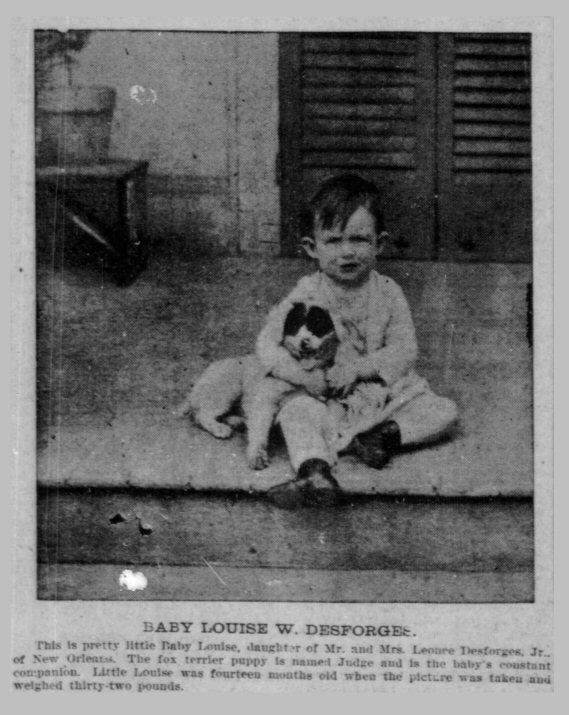
When Leon's second wife, his widow Louisa, died on February 15, 1958, she had three married daughters, ten grandchildren, and ten great-grandchildren. Leon and Louisa's daughters were Louise W. Caillier, Ruth A. Daroca, and Clara N. Bertucci. Leon's widow worked as a car cleaner for the railroad after he died at the age of 51. Leon's younger brother Charles died in 1910 and his father died in 1911.
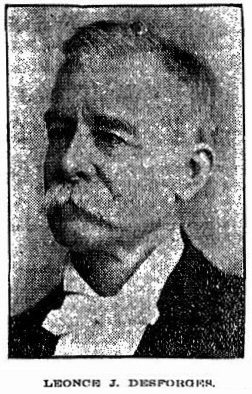
Leon's father, Leonce J. Desforges, was a successful wholesale grocer in New Orleans and a Civil War veteran. Leon's mother was Clara Maxent. When his mother died, his father married Clara's younger cousin Marie Oleptie Maxent, who had lived in the family home as a teenager, along with Leonce Sr.'s mother.
Leon's siblings from his father's first marriage were his older sister Angela Sicard and younger siblings Charles, Joseph, Emma Marie Rapier, and Stella O'Neill. From his father's second marriage he had half-siblings Virginia, Juliette, and Edward Desforges.
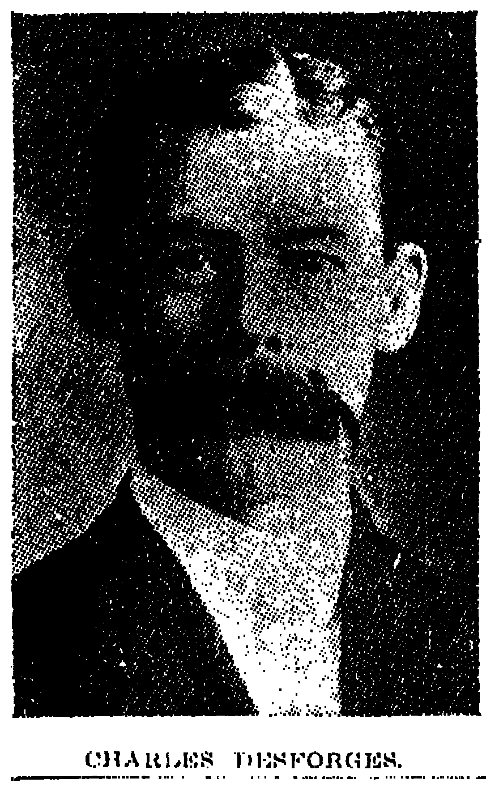
In 1910, Leon prevented his younger brother Charles from committing suicide after the end of his marriage. Six months later, Charles shot his estranged wife and son to death and killed himself.
Leon publicized his self-filling air tank invention and working model in 1913 and died the next year.
Personality
In 1900, Leon attempted suicide by swallowing strychnine such that his body would fall over the railroad tracks, but was quickly rescued by the vigilance of the brakeman. He was despondent over losing his job as a brakeman and couldn't find another job. In 1910 he prevented his younger brother from committing suicide by taking his gun away.
Legal Problems?
Leon and his older sister Angela Sicard contested their father's will which left everything to their stepmother (who was their age).
Articles & Graphics
More information on the inventor and the invention, if available: